
notes from fallow
grief


As a formerly enfaithed person—I was even Chapel Prefect—I’ve been struggling to name how I feel about Israel’s genocidal actions. Anger? Yes. Frustration? Yes. Disgust? Absolutely. Something else pulses, something I have been reluctant to admit, let alone examine.
Grief.
*
I grew up on bible stories, not because my parents were especially religious, but because like many middle class Kenyans, they collected multi-volume books: encyclopaedias (first the white ones and then the blue ones) and bible stories. They had what the internet tells me is the 10-volume set of The Bible Story assembled by Arthur S. Maxwell. Based on a cursory look, the set was originally published in 1953 and perhaps some Kenyan scholar has explored how it came to circulate in Kenya. If not, someone should.
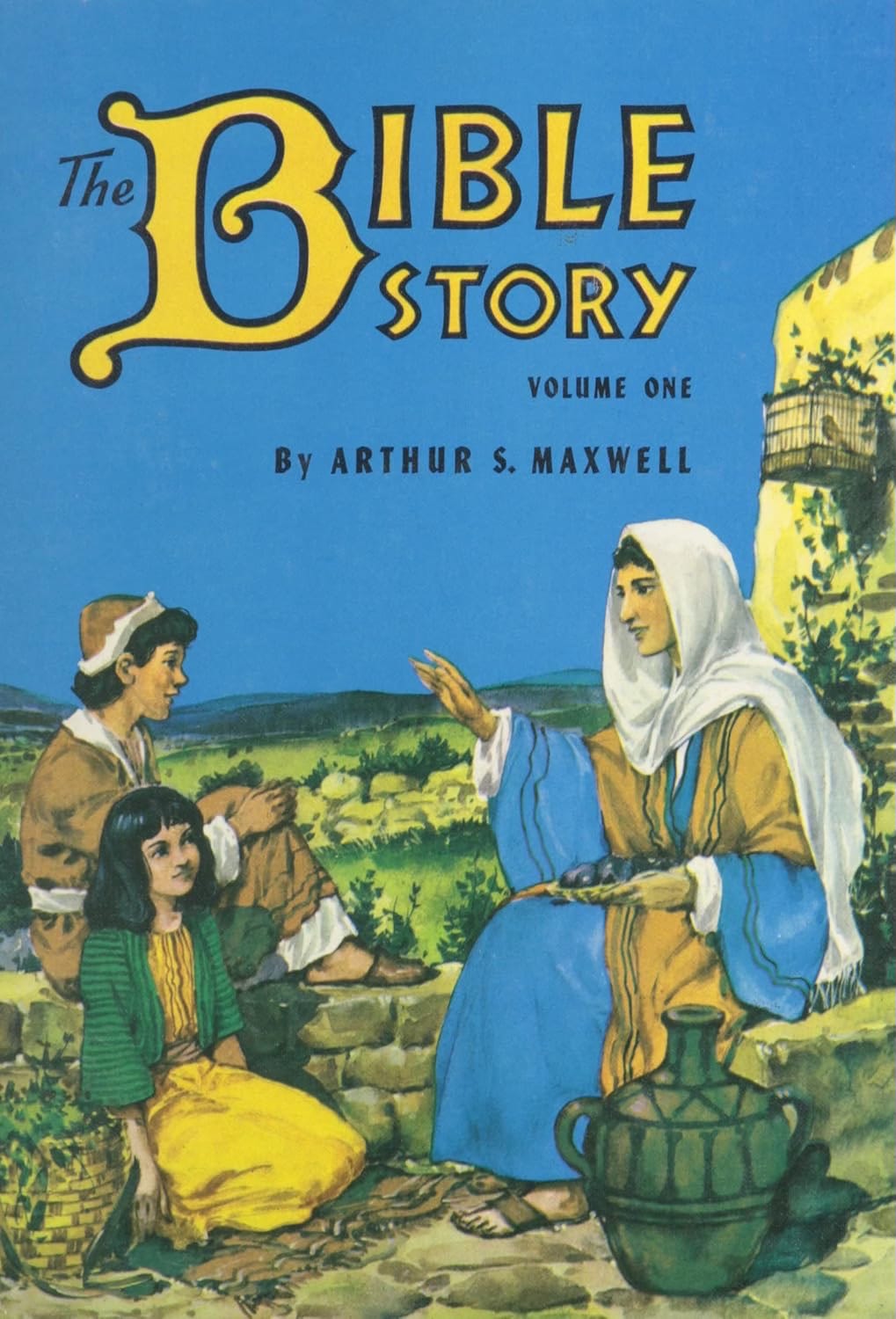
According to the internet, the set has 409 stories and covers the entire bible, from Genesis to Revelations. I do not recall if I read all the stories in all the volumes. I do recall reading and rereading about David and Goliath, Daniel in the lion’s den, the ten plagues of Egypt, Joseph and his technicolour coat, and the three men—Shadrach, Meshach, and Abednego—who survived being thrown into a fiery furnace. Perhaps I read about David murdering Uriah so he could rape Bathsheba? I do not remember. And, certainly, the text would not have been as explicit about the sexual violence.
In reading and rereading the story of David and Goliath, I learned how to think about bullying. About how the minoritized can fight over overwhelming odds, and win. This lesson was repeated in what is probably one of the most famous stories across Black anticolonialisms: Moses leading the enslaved Israelites out of Egypt.
Harriet Tubman : Black Moses
Across enslaved and colonized populations, the story of Israel escaping bondage in Egypt was a rallying call, a moment of inspiration, an invitation to risk imagining freedom, a provocation to escape to freedom. It wasn’t the only provocation. Freedom dreams moved through half-remembered folktales and prophetic visions, were carried in voices raised in song and bodies gathered in dance.
But it was the old testament stories of victory over overwhelming odds that watered freedom dreams. The colonizers imagined the bible would tame Black people, but Black people had always known how to read otherwise, to follow faint tracks in the dust and whispers in the trees; to know the textures of the night sky, even when it was cloudy, even when the stars were not visible; to listen to the wisdom of animals in the woods, to trust the rustle and song and heed the warning of silence.
The colonizers followed Paul and said slaves should obey their masters. The enslaved and colonized followed Moses and imagined and pursued freedom.
It is this Israel I have been grieving. This Israel that, even as I left religion, remained somewhere in my formative bones as a way to think freedom, as a way to desire otherwise.
It wasn’t only escape. It was also devotion.
I returned over and over to the story of Ruth and Naomi, to Ruth’s beautiful words:
16 And Ruth said, Intreat me not to leave thee, or to return from following after thee: for whither thou goest, I will go; and where thou lodgest, I will lodge: thy people shall be my people, and thy God my God:
17 Where thou diest, will I die, and there will I be buried: the Lord do so to me, and more also, if ought but death part thee and me.
I cannot explain why these words landed as they did. Perhaps it was the poetry. Perhaps I recognized the friendship of these words—the bible does not have many friendships between women. I cannot reconstruct what landed, what moved into my bones, what has endured. I can only say it has endured as a model of friendship and love. It made it easy for me to recognize the friendship my mother’s friends offered as she was dying. A Ruth kind of love.
Israel had named, for me, a kind of revolutionary possibility. That the weak might stand against the strong, that there can be moments of tenderness amidst violence, that evil shall not always prevail, that even in hardship something like manna might fall from the sky.
I may have moved from the seductions of religion, including the comfort that religion provides, but the child who read and reread bible stories, who learned to read and reread by reading and rereading bible stories, remains. Shaped, now, into the writer who reads and rereads.
*
Israel names an object—is object the right word—central to how I learned to think about power and resistance, about belief and risk, about quotidian brutality and small miracles, about the betrayals of family and the abundance of friendship. About a love so profound—we might call it obsessive—that made a man work for 14 years to marry a woman.
I cannot discard those memories. Nor would I want to.
So there is grief.
*
And, still, the bible provides a way out. Or, a way.
In his letter to the Corinthians, Paul writes,
11 When I was a child, I spake as a child, I understood as a child, I thought as a child: but when I became a man, I put away childish things.
When I reread the bible now—I do so rarely—I notice the violence. The ecocides, the massacres, the destruction of entire towns and cities by people who imagined themselves anointed.
When Palestinian children are taught musical scales using the sound of Israeli drones as points of departure, I have to rethink the story of Joshua circling Jericho, the awful sound of the trumpets as those inside the city were terrorized.
When I see images and images and images of dead Palestinian children, I think about a deity so drunk with power that he would murder the firstborn children of Egyptians. In the wails of Palestinian mothers, I hear the echoes of Egyptian mothers.
When I read stories of Israeli soldiers sexually assaulting Palestinians, I think of Lot offering his daughters to the men of Sodom and Gomorrah. Rape them, he says, but spare my male visitors.
*
Dionne Brand writes, “One is mislead when one looks at the sails and majesty of tall ships instead of their cargo” (A Map to the Door of No Return).
I have looked at the sails of the tall ships and I am now looking at the cargo. A ship called Nakba. A cargo of the dead and dying. Israel, a name I once associated with possibility, now incarnated as a genocidal, ecocidal force, indifferent to all life, hostile to all flourishing that exists beyond a narrow ethnonationalism.
Putting away childish things—the bible stories I loved in books written for children, the faith that once provided succour—is not easy. I grieve that the Israel I had once imagined as a model for ethical relations has never existed. I grieve that the story of Moses and the flight from Egypt so central to anticolonial imaginings of escape and freedom can no longer live in any Black freedom dreams.
And it might be asked if this grief should exist. Should I grieve the person I was? Should I grieve for an Israel that has never existed? And why grieve for that loss when the Israel that does exist murders and destroys? Shouldn’t my grief be reserved for Palestine and Lebanon?
Perhaps.
I can only say that I am not one thing. And psychic life has never obeyed the fictions of borders. Grief multiplies and compounds.
Thank you for writing this post, It resonates and gives me words to name the grief I feel and live through, without erasing the differences between us. Your fallow is being a rich harvest for your readers. Take care.
Thank you for this. I, too, was a Maxwell Bible Stories child, and I don't think that level of story-weaving, so early, so textured, is easily undone no matter how many years pass. (To this day I love the form of the Daniel 2 statue that that series' illustrators imagined. C'mon, biceps! C'mon thighs!)
As to how it arrived in your library, you can probably thank some local Seventh-day Adventists. "Uncle Arthur" Maxwell was part of what became a prominent Adventist family of editors, evangelists, and theologians, still influential over a half-century later.
Finally, I appreciate your notes on how we might now read the gap between the mythic nation and the contemporary political nation. I've found it really helpful to talk to Jewish people about this, especially at this time of year when the holidays include Passover.