
notes from fallow
time change

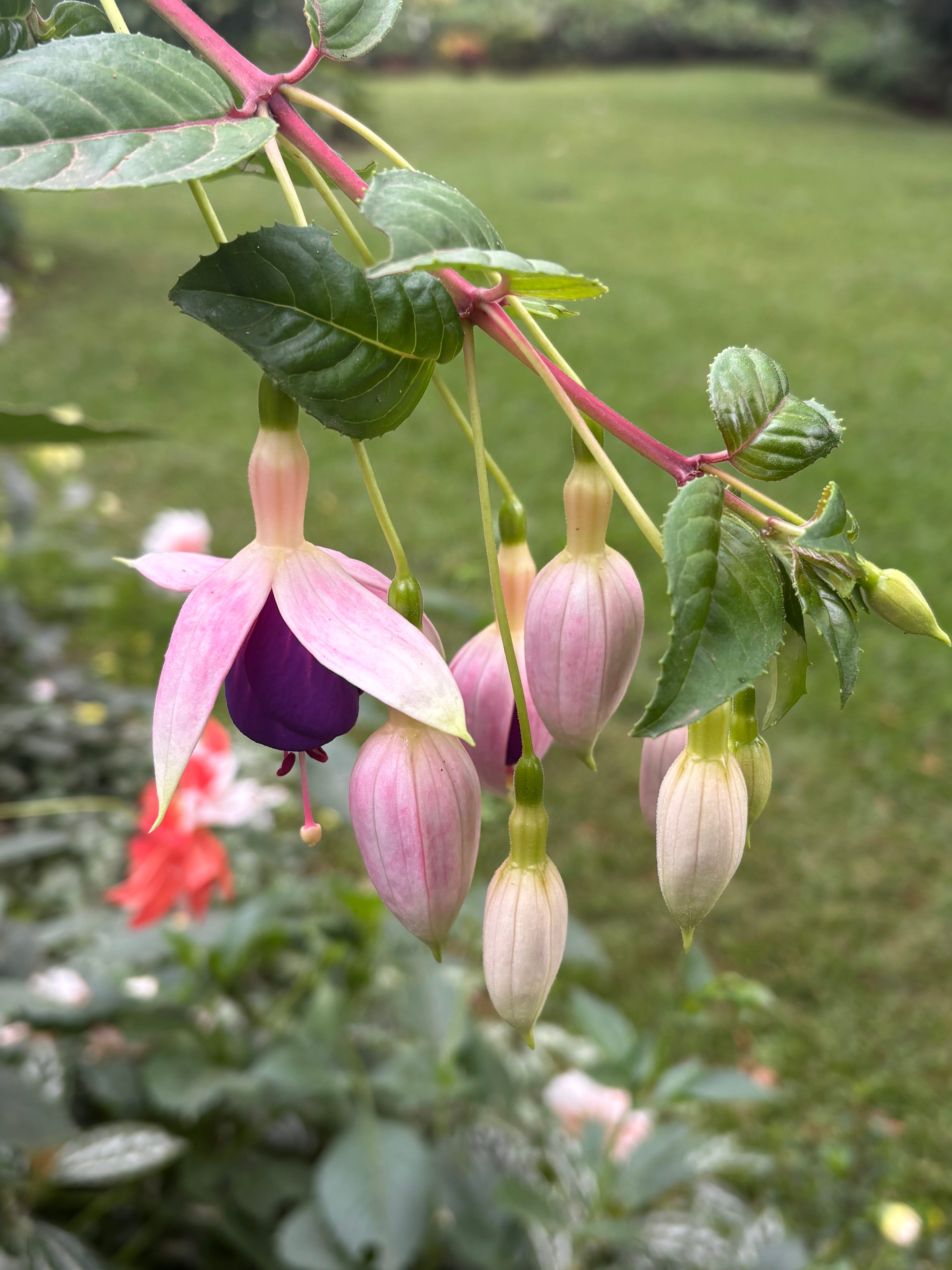
At the end of June, the nights are falling into the low digits, 11ºC and 12ºC nights. After a glorious season of blooming, the dahlias are succumbing to powdery mildew, which covers the leaves with a fine white substance that impedes photosynthesis, and so the leaves fade, brown, and die. Flowers wave above dying leaves, living just a little longer than their leafy support. I am deadheading faithfully, wanting to prolong the blooms as long as possible. Bees cluster on the pollen heads, which remain even after the petals have fallen, and I have to decide whether to clip off the petal-less heads, or if I should leave them for a few more days so the bees can continue to enjoy the pollen.
I came across a spent bird nest on my way to the garden. It must have fallen from the avocado tree. It was built with plant material and plastic paper, and I wonder if someone has told the birds that they should not be using plastic paper to build their nests. I imagine the birds would respond that humans have nothing to tell them about the dangers we pose to them. On any given day, sunbirds feed from the abutilon and mousebirds feed on the tree dahlias and other birds feed on the marigolds and the firecracker plant. I left the sunflower plants to dry for too long and the birds ate most of the seeds.
Kites gather in groups of three or more to eat fallen avocados. Sometimes, Abyssinian thrushes peck at the avocados. Ibises also eat avocados and then rinse their beaks in the bird bath. Firefinches cluster around the bird feeder to snack on millet seeds Pigeons will sometimes join them. I’ve been hearing hornbills in the neighbourhood and a few weeks ago, I saw two of them sitting in the avocado tree. They always seem to travel in pairs. In the evening, an ibis will perch on top of the house and yell so that other ibises can gather to plot their next adventures.
A neighbourhood cat will sometimes attempt to stalk an ibis, and this is very comical. Some kind of brawl is going on between the neighbourhood cats. One will yowl and another will growl and this noise will go on for hours. I saw one of the neighbourhood monkeys walking on the power lines. It seemed to be alone and that was surprising. Usually, a troop of monkeys walk on the lines, with little ones clinging to their mothers. As soon as the bananas look as though they might begin to ripen, we harvest them so the monkeys will not eat them. Earlier in the year, a troop sat themselves down in the avocado tree and had a proper feast. The white neighbours don’t seem to eat loquats and their tree—visible from my office—fruits vigorously. I hope the monkeys feast. Dogs bark at the monkeys, but from what I’ve seen, these monkeys are fairly peaceful and do not throw fruit at the dogs.
The beans I planted on a whim, unsure if they’d germinate as I’d stored the seeds in the freezer, came up beautifully, and I’ve been harvesting them. The raspberries have flowered beautifully and are producing fruit. Some days, the birds are gracious enough to leave some fruit for me.
During the cold season, plants slow down. They grow much more slowly and do not need as much water as they do when it’s very hot. I need to remember that this is dry cold, so I still need to water them.
A monarch butterfly caterpillar is feasting on the milkweed. I am delighted.
Like the plants that are going dormant, I, too, have entered something slower. This season of notes from fallow ends, and I will post less, perhaps once a month.
May we continue to dream, imagine, create, pursue, and practice freedom.
Grateful for your notes and words, however frequent or slow they arrive. Thank you always
Thank you for these 'notes from fallow'. Sending best wishes